Wraystech AcademyLoading page
Wraystech Academy
Job-ready learning
Basic

Machine Learning.

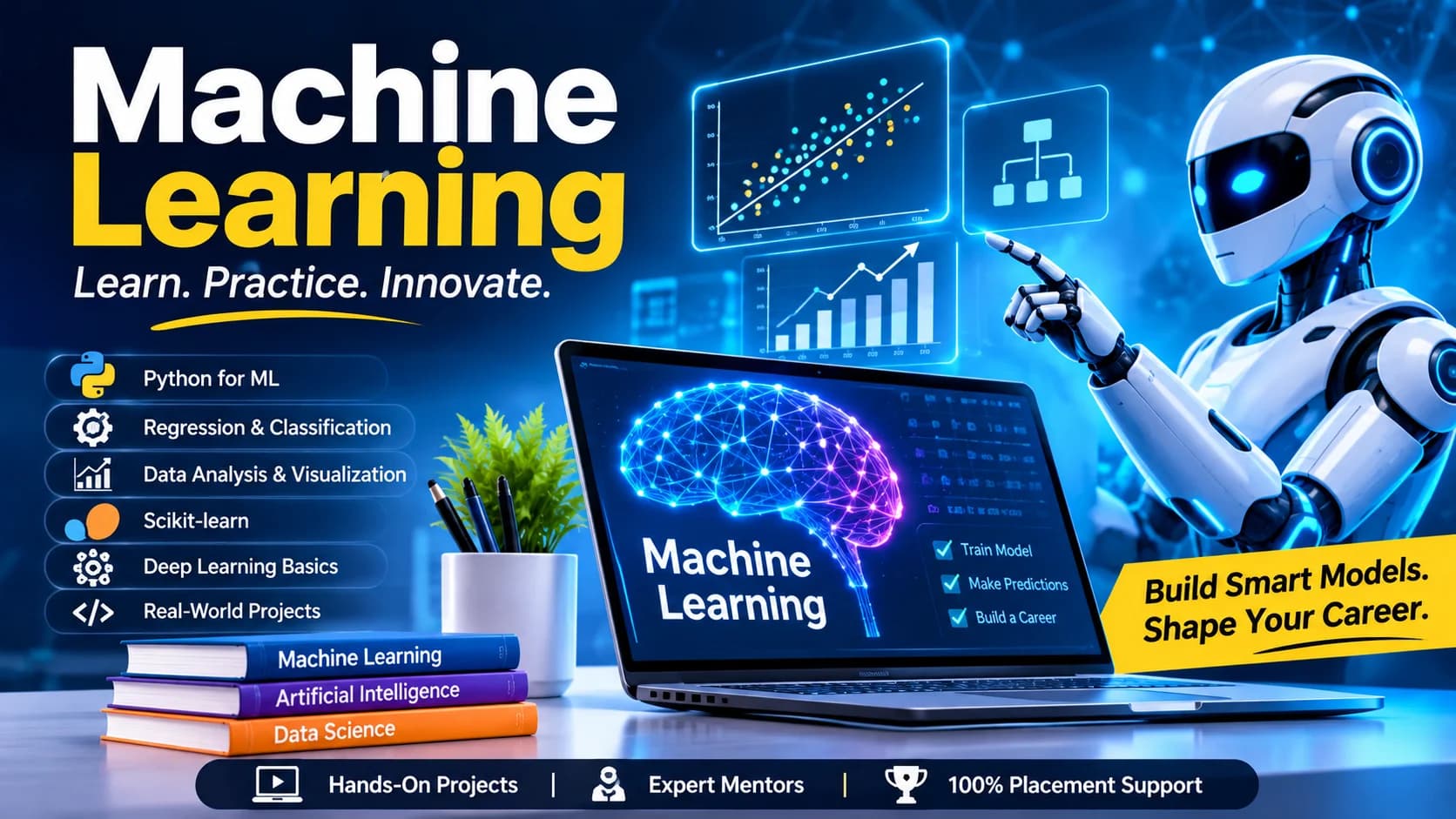
Covers supervised and unsupervised learning, model training, evaluation, feature engineering, and practical ML applications.

Learner rating

4.8/5

Course duration

2 Months

Learning modules

13 modules

Learning mode

Offline

1,180+ learners enrolledIndustry-recognized certificate
Explore Curriculum

Start learning.

Join 40M+ learners who transformed their careers.

By continuing, you agree to our Terms and Privacy Policy. We'll send important updates on WhatsApp.

1,180+ learners already enrolled

Your next step

Program overview

Machine Learning program overview

Machine Learning is a 2 Months Data Science with AI program built around hands-on practice, guided assignments, interview preparation, and placement support. Start with Supervised Learning, practise with Python, Jupyter, Pandas, and connect your learning through applied business scenarios. Build a portfolio that explains your approach and prepare for roles such as Machine Learning Associate and Junior Data Scientist.

2 Months structured training program

Hands-on practice with Python, Jupyter, Pandas

Live projects and portfolio-ready assignments

Certification guidance and placement assistance

A structured learning journey

Machine Learning Curriculum

Explore the curriculum, build your understanding one module at a time, and put each new skill into practice.

01Introduction to Machine LearningModule 1 · 1 topics
  • What is Machine Learning? Applications of Machine Learning Types of Machine Learning Machine Learning Lifecycle AI vs Machine Learning vs Deep Learning
02Python Programming for Machine LearningModule 2 · 1 topics
  • Python Fundamentals Variables, Data Types and Operators Conditional Statements and Loops Functions and Object-Oriented Programming Python Libraries for Machine Learning
03Mathematics and Statistics for Machine LearningModule 3 · 1 topics
  • Linear Algebra Fundamentals Probability Concepts Descriptive and Inferential Statistics Mean, Median, Mode and Standard Deviation Correlation and Covariance Hypothesis Testing
04Data Collection and PreprocessingModule 4 · 1 topics
  • Data Collection Techniques Data Cleaning and Transformation Handling Missing Values Outlier Detection and Treatment Encoding Categorical Variables Feature Scaling and Normalization
05Exploratory Data Analysis (EDA)Module 5 · 1 topics
  • Understanding and Exploring Datasets Univariate and Bivariate Analysis Data Visualization Correlation Analysis Pattern and Trend Identification Feature Selection Basics
06Supervised Learning – RegressionModule 6 · 1 topics
  • Introduction to Supervised Learning Simple Linear Regression Multiple Linear Regression Polynomial Regression Decision Tree Regression Random Forest Regression Model Evaluation Techniques
07Supervised Learning – ClassificationModule 7 · 1 topics
  • Logistic Regression K-Nearest Neighbors (KNN) Decision Tree Classification Random Forest Classification Support Vector Machine (SVM) Naive Bayes Algorithm Confusion Matrix and Classification Metrics
08Unsupervised LearningModule 8 · 1 topics
  • Introduction to Unsupervised Learning K-Means Clustering Hierarchical Clustering DBSCAN Clustering Principal Component Analysis (PCA) Dimensionality Reduction Association Rule Learning
09Advanced Machine Learning TechniquesModule 9 · 1 topics
  • Ensemble Learning Bagging and Boosting Gradient Boosting XGBoost and Random Forest Hyperparameter Tuning Cross-Validation Model Optimization
10Feature Engineering and Model EvaluationModule 10 · 1 topics
  • Feature Extraction and Selection Feature Transformation Training and Testing Datasets Overfitting and Underfitting Bias-Variance Trade-off Model Performance Evaluation Model Interpretability Basics
11Introduction to Deep LearningModule 11 · 1 topics
  • Neural Network Fundamentals Artificial Neural Networks (ANN) Activation Functions Forward and Backpropagation Loss Functions and Optimizers Introduction to TensorFlow and Keras
12Machine Learning Model DeploymentModule 12 · 1 topics
  • Saving and Loading ML Models Model Deployment Fundamentals Building APIs Using Flask or FastAPI Creating Applications Using Streamlit Model Monitoring Basics Introduction to MLOps
13Practical Projects and Career PreparationModule 13 · 1 topics
  • End-to-End Machine Learning Workflow Real-World Case Studies Hands-On Machine Learning Projects Git and GitHub Portfolio Resume Preparation Technical Interview Preparation Career Guidance

Find out how this curriculum fits your career goals.

Tools & technologies

Explore industry-relevant tools through hands-on learning to master practical, in-demand skills.

Python
Jupyter Notebook
Google Colab
NumPy
Pandas
Matplotlib
Seaborn
Scikit-learn
TensorFlow
Keras
XGBoost
Streamlit
Flask
FastAPI
Git and GitHub

Build practical skills with industry-relevant learning, expert guidance, and hands-on projects designed for modern teams.

Get the complete curriculum, tools, projects, and career support details in one brochure.

Build something that matters

6 Industry Projects

Every student completes 6 real-world projects — one per month — building a professional portfolio demonstrated during placement interviews.

Project 01

House Price Prediction System

Purpose

Build a Machine Learning model that predicts house prices based on property features.

Business Output

A trained model that predicts house prices based on property characteristics
Project 02

Customer Churn Prediction

Purpose

Develop a model to identify customers who are likely to stop using a company's services.

Business Output

A classification model that identifies customers at risk of churn.

Project 03

Customer Segmentation Using Clustering

Purpose

Group customers based on their purchasing behaviour and spending patterns.

Business Output

A customer segmentation model that identifies different customer groups for targeted marketing.

Project 04

Spam Email Detection System

Purpose

Develop a Machine Learning model that classifies messages or emails as spam or legitimate.

Business Output

A text classification model that detects spam messages

Portfolio tip: document the problem, your approach, and the result so you can walk an interviewer through your decisions.
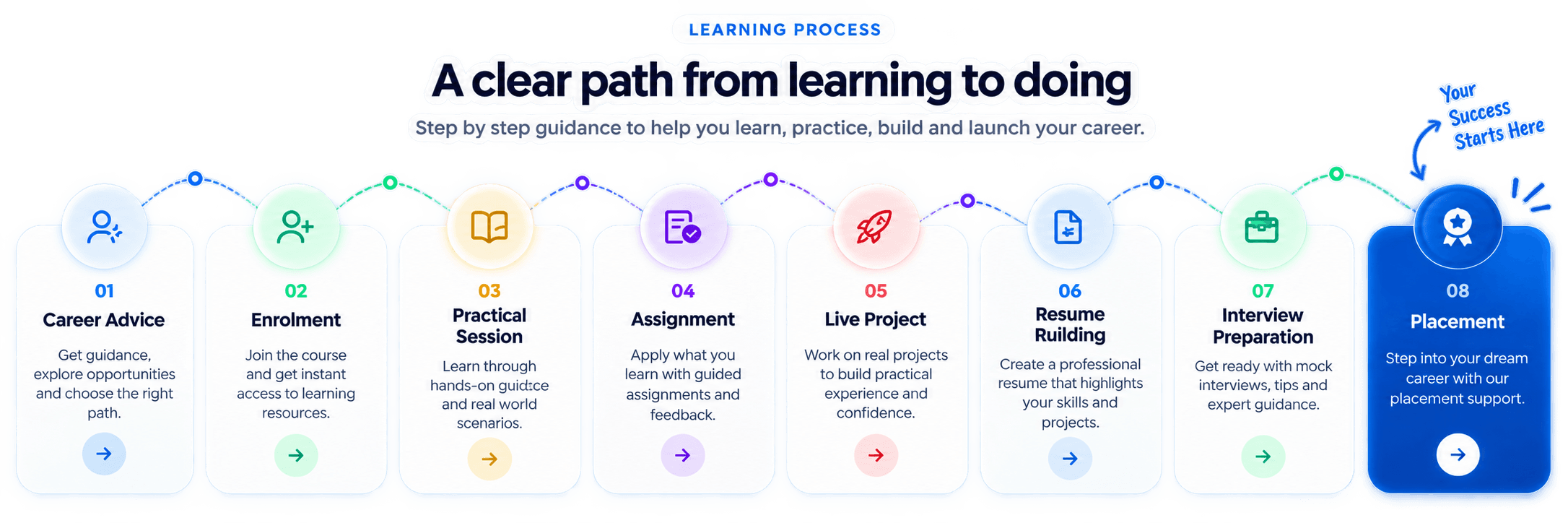
Learning process from career advice and enrolment through practical sessions, projects, interview preparation, and placement

Who should enroll

  • Python learners moving into ML
  • Data analysts adding predictive modeling
  • Engineering and science graduates
  • Students preparing for AI careers

Learning modes

  • Classroom training at Thane center
  • Live online interactive sessions
  • Recorded sessions for missed classes
  • Free demo class before enrollment

Prerequisites

  • Basic Python knowledge recommended
  • Basic statistics is helpful
  • Own laptop for model-building labs

95% of our students successfully get placed after completing our programs.

Learn more about how we have been impacting thousands of careers.

  • Apply Machine Learning skills to practical business scenarios
  • Use Python, Jupyter, Pandas with confidence
  • Build project work that can be shown in interviews
  • Prepare for relevant certifications and job roles

Recognition that travels with you

Globally recognized certifications

Machine Learning Certificate

Certification pathway

Stand out with proof of practical skills.

Build a credible portfolio of skills with structured preparation, practical projects, and certification guidance from experienced mentors.
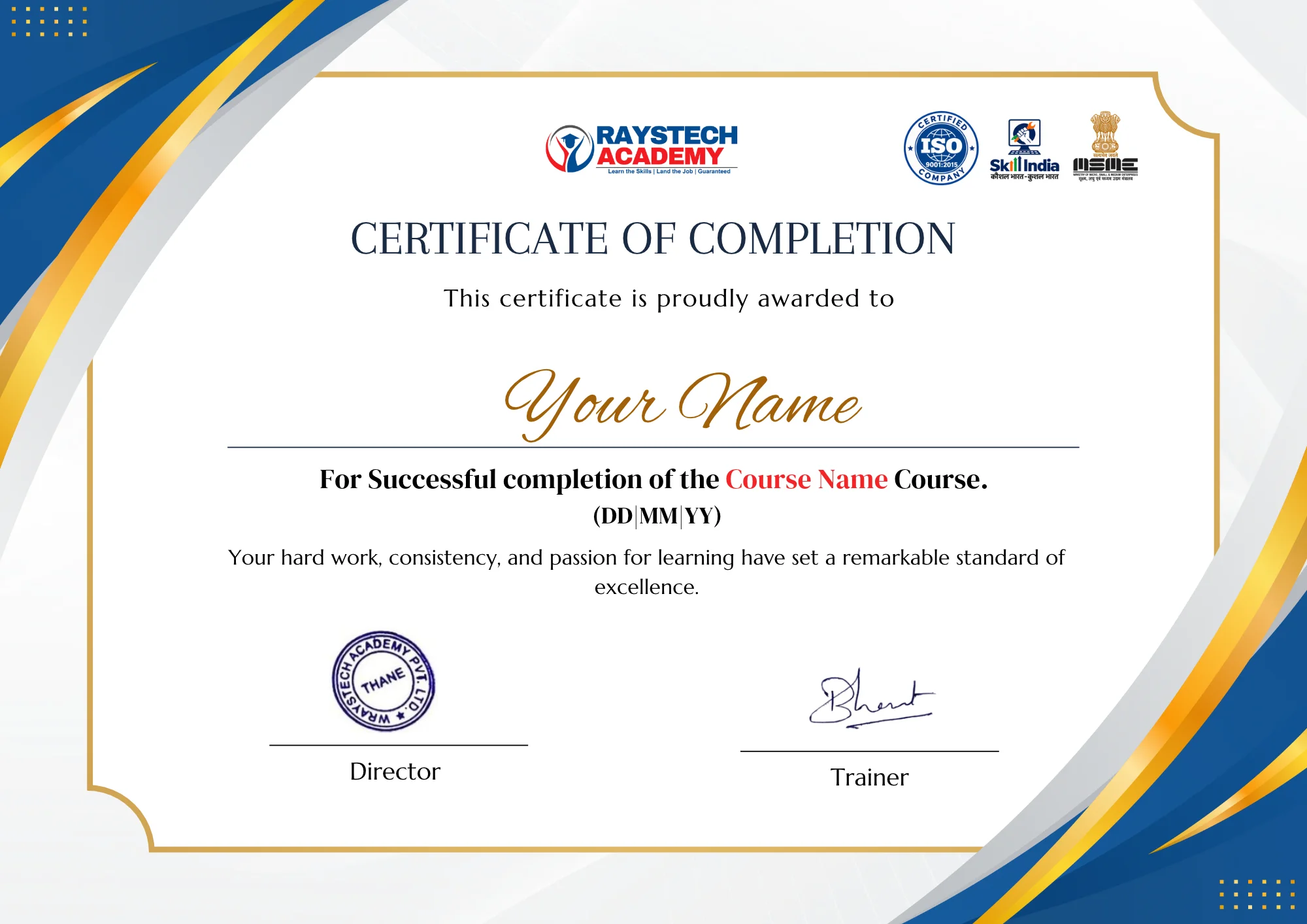
Machine Learning Certificate certificate

Beyond the classroom

Career Assistance Program

Soft skill session

Resume building

Aptitude training

LinkedIn profile building

Mock interview

Job assistance

Placement Assistance

Dedicated placement support with industry connections and recruiter interactions.

Dedicated placement cell with job referrals
Resume & LinkedIn profile optimization
Mock interviews with industry experts
Interview call scheduling support
Career counseling until you get placed
Career and placement support for Data Analytics learners
Accenture logoCapgemini logoCognizant logoDeloitte logoHCLTech logoIBM logoInfosys logoWipro logoAccenture logoCapgemini logoCognizant logoDeloitte logoHCLTech logoIBM logoInfosys logoWipro logo

Access your complete learning experience through our all-in-one learning portal.

SkillUpAll-in-one
01Live Mentor Sessions
02AI-Powered Practice
03Progress Tracking
04Career support
One learning hub for your complete career journey

Your next opportunity starts here

Limited seats. High demand. Enroll today.

Students learning through the course programIndustry-ready courseFilling fast

Get industry-ready with Wraystech Academy

  • Enroll for one course and get access to the complete learning journey
  • In-depth curriculum with live mentor support
  • Integrated projects and industry-recognized certifications
  • Practice on real-world cases and career-ready assignments
  • Dedicated placement guidance and interview preparation
Career growth through practical learning

CAREER OUTCOME

Offer letter preview

Congratulations!

Your practical skills, projects, and career preparation can help you approach interviews with clarity and confidence.

Role-ready preparation

Portfolio, interview practice, and mentor feedback.

Career counsellor

READY

A little more clarity

Frequently asked questions

Answers to common questions about learning, projects, and getting started.

A text classification model that detects spam messages

Machine Learning is a branch of Artificial Intelligence that enables computers to learn from data, identify patterns and make predictions or decisions without being explicitly programmed for every task.

What will I learn in the Machine Learning course?

You will learn Python programming, mathematics and statistics, data preprocessing, exploratory data analysis, supervised and unsupervised learning, regression, classification, clustering, model evaluation, deep learning fundamentals and model deployment.

Who can join the Machine Learning course?

Students, graduates, working professionals, software developers, data analysts and individuals interested in Artificial Intelligence and data-driven technologies can join this course.

I need programming knowledge to learn Machine Learning?

Basic programming knowledge is helpful but not mandatory. The course introduces Python programming fundamentals before moving into Machine Learning concepts and algorithms.

What are the prerequisites for learning Machine Learning?

Basic computer knowledge, logical thinking and an interest in programming and data analysis are helpful. Basic mathematics and statistics knowledge can make learning easier.

Which programming language is used in Machine Learning?

Python is one of the most widely used programming languages for Machine Learning because of its libraries, flexibility and strong community support.

Which tools and technologies are covered in the Machine Learning course?

The course covers Python, Jupyter Notebook, Google Colab, NumPy, Pandas, Matplotlib, Seaborn, Scikit-learn, TensorFlow, Keras, XGBoost and Streamlit.

What is the difference between AI, Machine Learning and Deep Learning?

Artificial Intelligence is the broader field of creating intelligent systems. Machine Learning is a subset of AI that learns patterns from data, while Deep Learning is a subset of Machine Learning that uses multi-layered neural networks.

What are supervised and unsupervised learning?

Supervised learning uses labelled datasets to train models for prediction and classification. Unsupervised learning identifies hidden patterns or groups in data without predefined labels.

Will I work on practical Machine Learning projects?

Yes. Students work on practical assignments and projects such as House Price Prediction, Customer Churn Prediction, Customer Segmentation and Spam Email Detection to apply Machine Learning concepts.

How long does it take to complete the Machine Learning course?

The course duration may vary depending on the training schedule and learning pace. A structured Machine Learning program generally takes around 4–6 months.

What career opportunities are available after completing the course?

After completing the course and developing practical skills, learners can explore roles such as Machine Learning Engineer, Junior Machine Learning Developer, Data Analyst, AI Developer and Data Science Associate, depending on their qualifications and experience.

Is Machine Learning difficult to learn?

Machine Learning may seem challenging initially because it combines programming, mathematics and statistics. With structured guidance, regular practice and hands-on projects, beginners can gradually develop the required skills.

Will I receive a certificate after completing the Machine Learning course?

Certificate availability and eligibility depend on the institute's course completion and assessment requirements. Students can contact Raystech Academy for details.

Does Raystech Academy provide placement assistance after the Machine Learning course?

Raystech Academy provides career guidance and placement assistance to help students prepare for job opportunities through resume preparation, interview practice and career support.

Your next chapter starts with a conversation.

Discuss your background, explore the course, and get help choosing a learning plan that fits your goals.

Book a Free Demo